
Casino licences explained
 Casino guides


Every casino footer carries a licence badge, and most players never click it. That badge is the only thing standing between you and an operator that keeps your balance. A licence decides who checks the games, who holds the casino to its own bonus terms, and who you can turn to when a withdrawal stalls. It does not decide whether the site is allowed in your country. Those are two separate questions, and this guide keeps them apart.
Below: what a licence is supposed to do, how to check one in two minutes, and how six licences you will meet on offshore casinos compare. Facts come from each regulator's own rules and registers.
What a licence is supposed to do
A serious licence covers four things a player cares about:
- A public register. You can look the operator up by name or domain and see whether the licence is active.
- Player funds. Rules on keeping your balance apart from the company's own money, so it is there when you withdraw.
- Fair games. Games and random number generators certified by an approved testing lab, so the stated RTP is real.
- A dispute route. Somewhere to go after the operator says no, ideally an independent body whose decision the operator must follow.
Licences also impose identity checks (KYC) and anti-money-laundering rules. That is why a licensed casino asks for documents before your first withdrawal: it is a sign of supervision, not of bad faith.
How to check a licence in two minutes
- Scroll to the casino footer and note the licence number, the company name and the regulator.
- Open the regulator's own register, never a page the casino links to.
- Search the company name or the domain. The domain you are on should be listed, and the status should be active.
- Click the seal. A real seal opens the regulator's page for that licensee, not a picture.
- Check the regulator's enforcement or sanctions list for the same company.
If the number is missing, uses an outdated format, or the domain is not on the register, treat the site as unlicensed for practical purposes.
The six licences compared
| Licence | Public register | Player funds rule | Dispute route |
|---|---|---|---|
| Malta (MGA) | Licensee register, search by name or URL | Player Protection Directive, Part IX | ADR body in the EU/EEA |
| Isle of Man (GSC) | Online licensee register with domains | Participants' money regulations | GSC complaint form |
| Estonia (EMTA) | List of legal gambling operators | Not confirmed from EMTA pages | EMTA email contact for listed operators |
| Curacao (CGA) | Online gaming licence registry | Segregated player account required | Free certified ADR, operator pays |
| Kahnawake (KGC) | Permit-holder list (names and URLs) | No explicit rule found in the regulations | KGC complaints address |
| Anjouan | Register not confirmed on an official page | No published rule found | No official route found |
| Malta (MGA) | 3 checks |
|---|---|
| Isle of Man | 3 checks |
| Curacao (CGA, 2024 law) | 3 checks |
| Estonia | 2 checks |
| Kahnawake | 2 checks |
| Anjouan | 0 checks |
The chart counts only whether we found the rule on the regulator's own pages, not how strictly it is enforced. Treat it as a floor, not a ranking of trust.
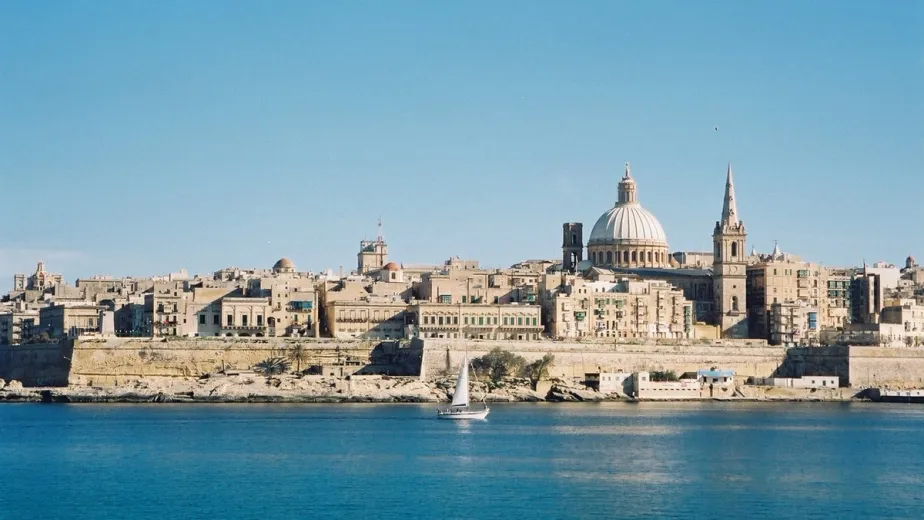
Malta Gaming Authority (MGA)
Malta's regulator works under the Gaming Act and is the licence you will see most on European-facing casinos. Its licensee register lets you search by company, status, URL or game type, and the MGA seal on a licensed site links straight to the entry. The Player Protection Directive sets out how player funds are held and reported. Disputes go first to the operator, then to an independent ADR body based in the EU or EEA; the MGA's own Player Support Unit still takes reports of unfair conduct. Licence numbers look like MGA/B2C/... or MGA/CRP/....
Isle of Man Gambling Supervision Commission (GSC)
The Isle of Man regulates online gambling under the Online Gambling Regulation Act 2001. The GSC publishes an online licensee register showing each company's licence type, validity dates and active domains, and keeps a separate list of former licence holders. Its regulations require operators to protect participants' money. Complaints go to the operator first, then to the GSC's own complaint form.
Estonia (Tax and Customs Board, EMTA)
Estonia licenses gambling through its Tax and Customs Board. EMTA publishes a list of legal gambling operators sorted by game type, with brand names and websites, and a separate list of blocked gambling websites. Every company holding an Estonian activity licence or operating permit declares and pays gambling tax to EMTA, and EMTA invites players to email it about problems with a listed operator. The list is the place to check: if the domain is not there, the Estonian licence claim does not hold.
Curacao Gaming Authority (CGA), formerly the Gaming Control Board
Curacao changed the most. Under the old system, a few private master-licence holders issued sublicences to hundreds of casinos, and player protection was thin. The National Ordinance on Games of Chance (LOK) came into force on 24 December 2024, and the CGA now grants licences directly. The old sublicence system ended on 15 October 2025, so numbers in the old format are no longer valid; current ones look like OGL/2024/....
The new licence conditions require player funds in a segregated account, games certified by a CGA-approved testing lab, and the CGA's digital seal on every page. Under the CGA's complaints policy, operators must confirm a complaint in writing within one week and answer within four weeks, extendable once by four more; responsible-gaming complaints such as self-exclusion get a two-day, five-business-day track. Operators also offer free independent ADR at their own cost. Check the number in the online gaming licence registry PDF, and note the status: many licences show "assessment in progress", which means the CGA has not finished its review.
Kahnawake Gaming Commission (KGC)
The KGC has licensed online gaming from the Mohawk Territory of Kahnawake since 1999, and its sites must be hosted in the territory's data centre. The permit-holder list shows operators and URLs but not permit numbers. Its regulations set a 45-day limit for the operator's final decision on a complaint, after which you can email the commission within six months of the problem. One request excludes you from every KGC-authorised operator at once. We found no explicit player-funds segregation rule in the current regulations.
Anjouan (Union of the Comoros)
Anjouan licences, numbered with an ALSI prefix, are the newest and lightest of the six. We could not confirm an official register page, published player-funds rules or a player complaint service on any official site. News reports from October 2026 say the Comoros central bank and government dispute the Anjouan licensing regime; we could not read that position on a Comoros government page, so treat it as reported, not confirmed. A casino holding only this licence offers you little outside recourse if something goes wrong, so weigh its bonus terms against that.
Licensed is not allowed everywhere
An offshore licence covers the operator, not the player's country. Several European countries run their own systems: Finland and Austria have state gambling monopolies, Ireland is building a licensing system under its 2024 Act, and Estonia publishes a list of blocked gambling websites. Read our country guides for Finland, Austria and Ireland before you sign up anywhere.
Licences and bonuses
Licence strength and bonus size are often inversely related: the lighter the regulator, the bigger the headline offer tends to be. Before you chase a number, compare offers on expected value with our guide on how to compare casino bonuses and the wagering calculator. If you pay with coins, our crypto casino bonuses guide covers what changes. To see which casinos accept players in your country, and under which licence, start from casinos by country. For every term used here, see the glossary, and if gambling stops being fun, our responsible gambling page lists where to get help.
Sources
- mga.org.mt
- mga.org.mt
- mga.org.mt
- isleofmangsc.com
- isleofmangsc.com
- cga.cw
- gamingcontrol.spin-cdn.com/media/online_gaming_policies_and_guidelines/20261012_license_reclassification_15_oct_2025.pdf
- gamingcontrol.spin-cdn.com/media/online_gaming/20261021_license_conditions_for_an_indefinite_term_online_gaming_license.pdf
- gamingcontrol.spin-cdn.com/media/online_gaming_policies_and_guidelines/20261012_player_complaints_policy_v11_june_2025.pdf
- gamingcommission.ca
- gamingcommission.ca
- gamingcommission.ca
- emta.ee
- emta.ee
Questions players ask
Which online casino licence is the strongest?
Of the six covered here, the Malta Gaming Authority and the Isle of Man Gambling Supervision Commission publish the most detailed player-protection rules, keep searchable registers and require a dispute route. Curacao's 2024 law raised its standards; Anjouan publishes the least, and news reports say the Comoros government disputes it.
Does a licence make a casino legal where I live?
No. A licence covers the operator, not your country. Many countries, including several in Europe, run their own systems and treat foreign-licensed sites as unlicensed there. Check your own country's rules before you play.
How do I check a casino's licence?
Find the licence number and company name in the casino's footer, then look them up on the regulator's own register, not on the seal image alone. MGA, Isle of Man, Curacao, Estonia and Kahnawake all publish lists of licence holders.
Are old Curacao sublicence numbers still valid?
No. The Curacao Gaming Authority ended the old sublicence system on 15 October 2025. Current licences use numbers in the OGL format and appear in the authority's online gaming licence registry.
Who do I complain to if a licensed casino will not pay?
Always the operator first. If that fails, use the dispute route the licence requires: an approved ADR body for MGA and Curacao licensees, the Kahnawake Gaming Commission's complaints address, or the Isle of Man commission's complaint form.